The Legend Of Ghost Mountain
Playtest Review
I’ve just finishing running Pinnacle Entertainment’s The Legend Of Ghost Mountain.
Here’s what we thought.

Overview (from PEG’s website)
Ghost Mountain is a sacred site containing a physical gate to the underworld, and the Ghost Wardens who reside there are dedicated to making sure the souls of the dead pass peacefully through to the afterlife. But something has gone wrong. An army of the dead is rampaging across the land, committing atrocities against the living. Only the Ghost Wardens can set things right.
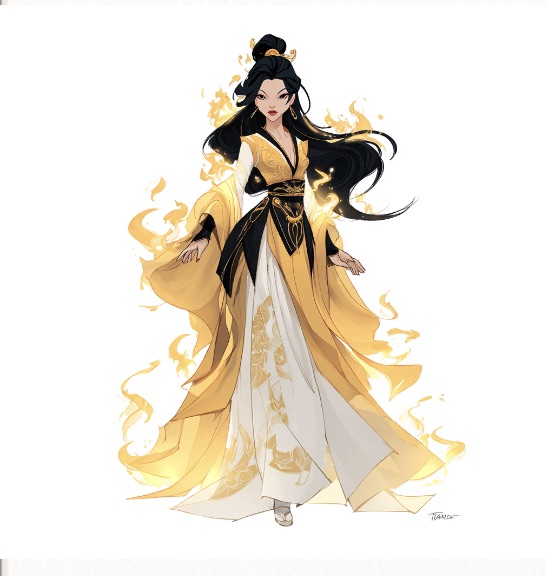
Ghost Wardens draw magical power from strong emotions. Rage. Fear. Joy. Disgust. Sorrow. Only a handful of candidates pass the harrowing trials to harness these emotions—a process that turns heir hair white. Those who succeed are privy to mystical martial arts techniques. Here the styles aren’t based on the movements of animals but the feelings that drive human triumphs and tragedies.
Legend of Ghost Mountain includes the “Face the Inevitable” Plot Point Campaign. Plot Points provide a structure for Game Masters to tell big stories but leave room for individual adventures (Savage Tales or your own custom creations) between the major beats. The players must make world-changing decisions and lead the battle against the rebellious dead.
Our Play-Through
We ran this campaign over 20 sessions of about 3 hours online using Fantasy Grounds VTT.
The executive summary is that the players loved it. I loved most things about it but had issues managing the powerful NPCs to make the fights challenging enough. I wish I’d had was an assistant GM to run the villains to make some of the big showdowns more memorable.
Details
Character generation presents you with the choice to run pre-gens or generate your own characters. Naturally my group chose to roll their own. There were a bunch of “engagement points” written into the campaign for the pre-gens and suggestions as to how to write your own.
What it could probably have done with is an approach more like that of Odyssey of the Dragonlords which gives each character an archetype suitable to the setting and gives engagement points for those, giving them more generality like “You feel guilty about the death of someone you care for, perhaps your brother” than the very specific named-NPC-brother of a pregen in Ghost Mountain.
I compromised by asking the players to volunteer to take on what seemed to me the most pivotal archetypes – someone from one of the noble houses, which is important for access to powerful NPCs, and someone from one of the fighting schools which sets up some good taunt-offs and rivalries.
This worked but I feel like I short-changed some of the other characters by finding it harder to slot their personal stories into the engagement points.
I am a fan of campaigns that give the player characters an in-game-world job and responsibilities. The fact the all the PCs are Ghost Wardens means it is literally their job and no-one else’s to deal with the army of the dead. This gives them in-game authority and makes the political clashes interesting and motivated and keeps them from getting too sidetracked.
The written campaign timeline strikes a good balance between giving the players agency and meaningful choices. There’s no GM railroading because the timeline is imposed by in-game events and the actions of the undead army. Player choice gives them the chance to tackle the army in their own way, with decision points like “Do you come to the rescue of the townsfolk of Dead Lake or press on because your mission is urgent” clearly explained with probably consequences set out for the GM.
We ended up using 90% of the written material – a much higher proportion than usual for my groups in a pre-written campaign with a definite timeline. I filled in a few extra events inspired by the tables supplied for inspiration and random event generation. The main thing I needed to supply was extra maps for VTT play – PEG products are produced to a price and part of that is that you don’t get as many maps as you might in a D&D hardcover.
The adventure makes good use of Savage Worlds’ sub-systems especially for Mass Battles, with characters’ successes often translating to more troops at their command during the battles.
There are some niggles.
The aforementioned paucity of maps.
The index isn’t as helpful as it could be.
The NPCs are detailed with sometimes a dozen edges and powers, which is took much for this GM to handle on the fly- I’d have liked it boiled down to the stat blocks. Just say “four attacks” rather than Improved First Strike, Counterattack, Frenzy, Brawny, Brawler, Harder To Kill, Iron Jaw, Mystic Powers (Boxer), Nerves of Steel.
The segment in Capital City is a bit more Railroaded – this is the 10% we left out because our pro-active group didn’t hang around long enough to trigger them.
The organisation of the deep background to do with the First Emperor is scattered through the book- a section containing all of it in one place would have helped.
But niggles they are, and we had a great time.
Solidly in the top tier of commercial campaigns we’ve played.